



“Thermal Expansion to Be Verified by Contractor”: What That Note on Your Drawings Really Means
It’s easy to miss. One short line on your issued-for-construction drawings can hand you an engineering responsibility: verifying thermal expansion. On a design-build job, that responsibility is yours from day one. Either way, you are the one who has to show that your piping will absorb thermal growth without cracking, tearing out its supports, or overloading the equipment it ties into.
Who is responsible for the thermal expansion check?
There are two common situations where the obligation lands on the mechanical and piping contractor holding the construction drawings.
The note on the drawings
The engineering firm leaves the flexibility analysis out of its scope and adds a note such as “thermal expansion to be verified by contractor.” By building to those drawings, you accept that task.
Delegated design (design-build)
You design the piping system or its supports yourself, so the design is yours to stand behind, flexibility included.
Which piping systems are covered in Quebec?
The thresholds below come from Quebec’s Regulation respecting pressure installations (chapter B-1.1, r. 6.1).
System | Covered when | Worth knowing |
Steam and condensate | Pressure above 103 kPa (15 psi) | This is the regulation’s “low pressure” threshold |
Pressurized gases (compressed air, nitrogen, CO₂) | Pressure above 103 kPa | Compressed air is exempt up to NPS ¾ |
Hot water and superheated water | Above 120 °C or above 1,100 kPa | Typical hydronic heating often falls below the threshold |
Thermal fluid (thermal oil, hot glycol) | Connected to a regulated boiler | Covered even at low pressure |
Other process liquids | Vapour pressure above 205 kPa absolute at maximum operating temperature | Targets volatile fluids under pressure |
Refrigeration (ammonia and other refrigerants) | Piping on a system above 11 kW | A CSA B52-certified system is exempt up to 125 kW |
As a general rule, fire protection systems and low-pressure piping are not covered.
Important
These thresholds summarize a regulation that includes specific exemptions. Every case should be confirmed by an engineer.
Do the design codes stop at these thresholds?
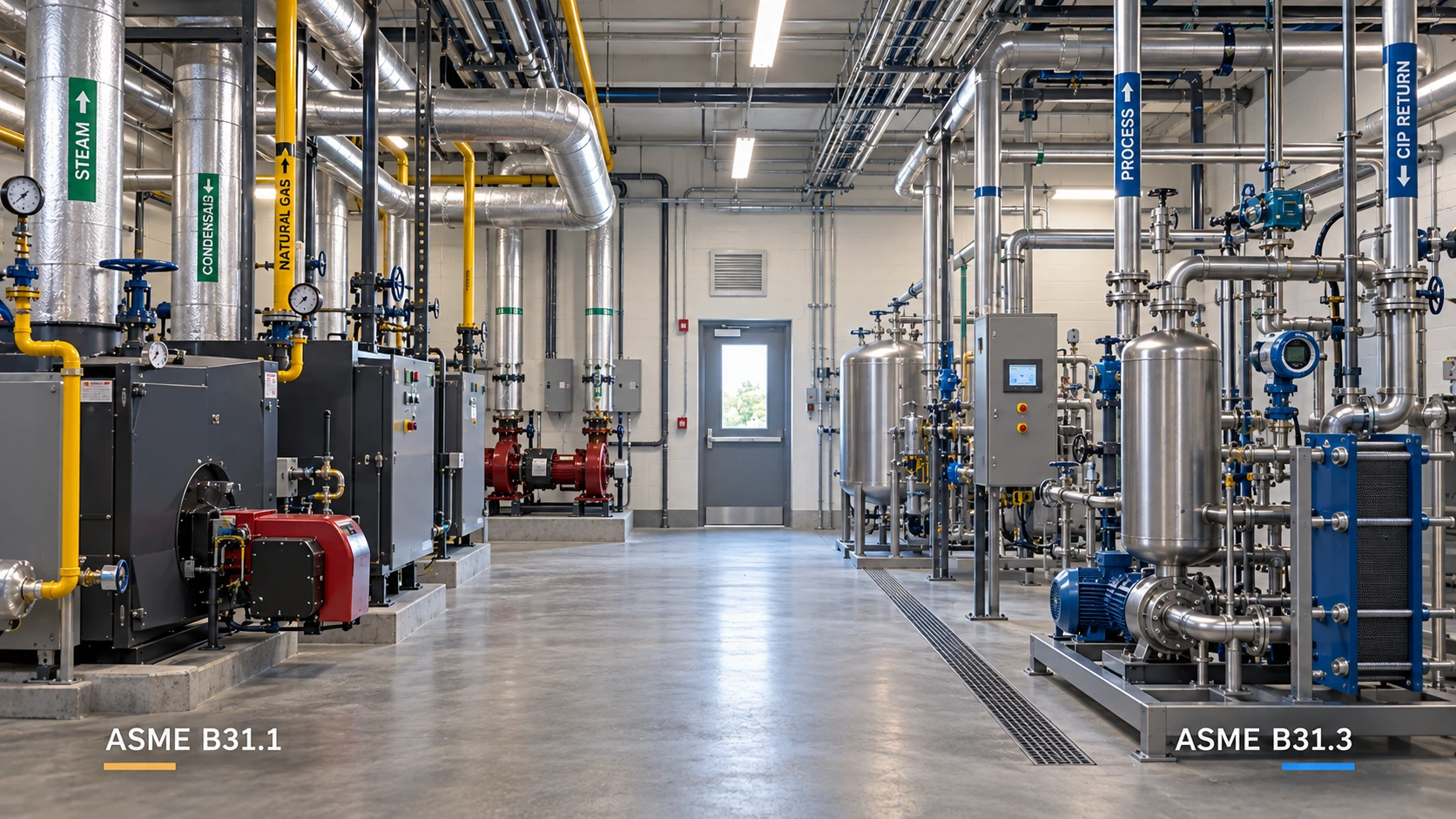
No. Even below these thresholds, the ASME B31.1 and B31.3 design codes require a flexibility check on every piping system. The regulation focuses on the highest-risk installations; the code applies from the moment the system is designed.
ASME B31.3 | Process piping. The flexibility analysis requirement is set out in paragraph 319. |
ASME B31.1 | Power piping and steam systems, with the same verification requirement. |
What’s at stake if the check isn’t done?
A non-compliance finding by the RBQ
Corrective work, rework and delays, all at your expense.
Failures in service
Leaks, fatigue cracking, torn-out supports, and excessive loads on flanges and connected equipment.
Liability
If something goes wrong, the contractor who accepted the verification on the drawings is the one who has to prove it was done.
In Quebec, a regulated system must also be installed in accordance with BNQ 3650-900, which requires proper anchors and supports. Installing piping without a flexibility check leaves the contractor exposed on two fronts: compliance and long-term reliability.
What does our analysis include?
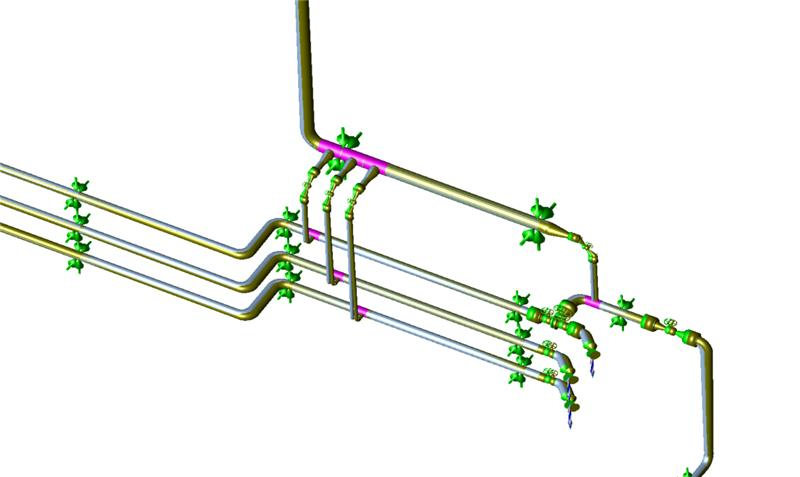
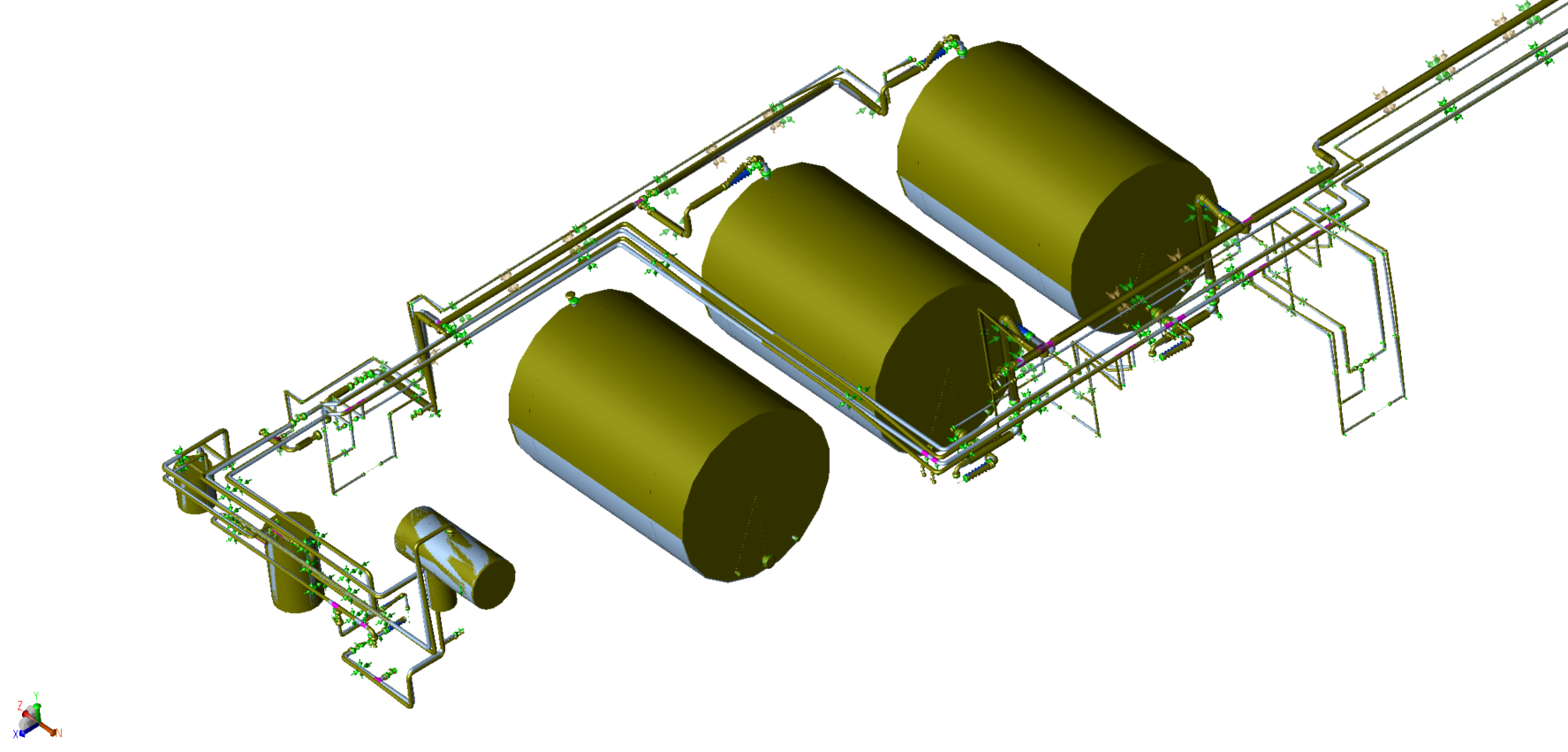
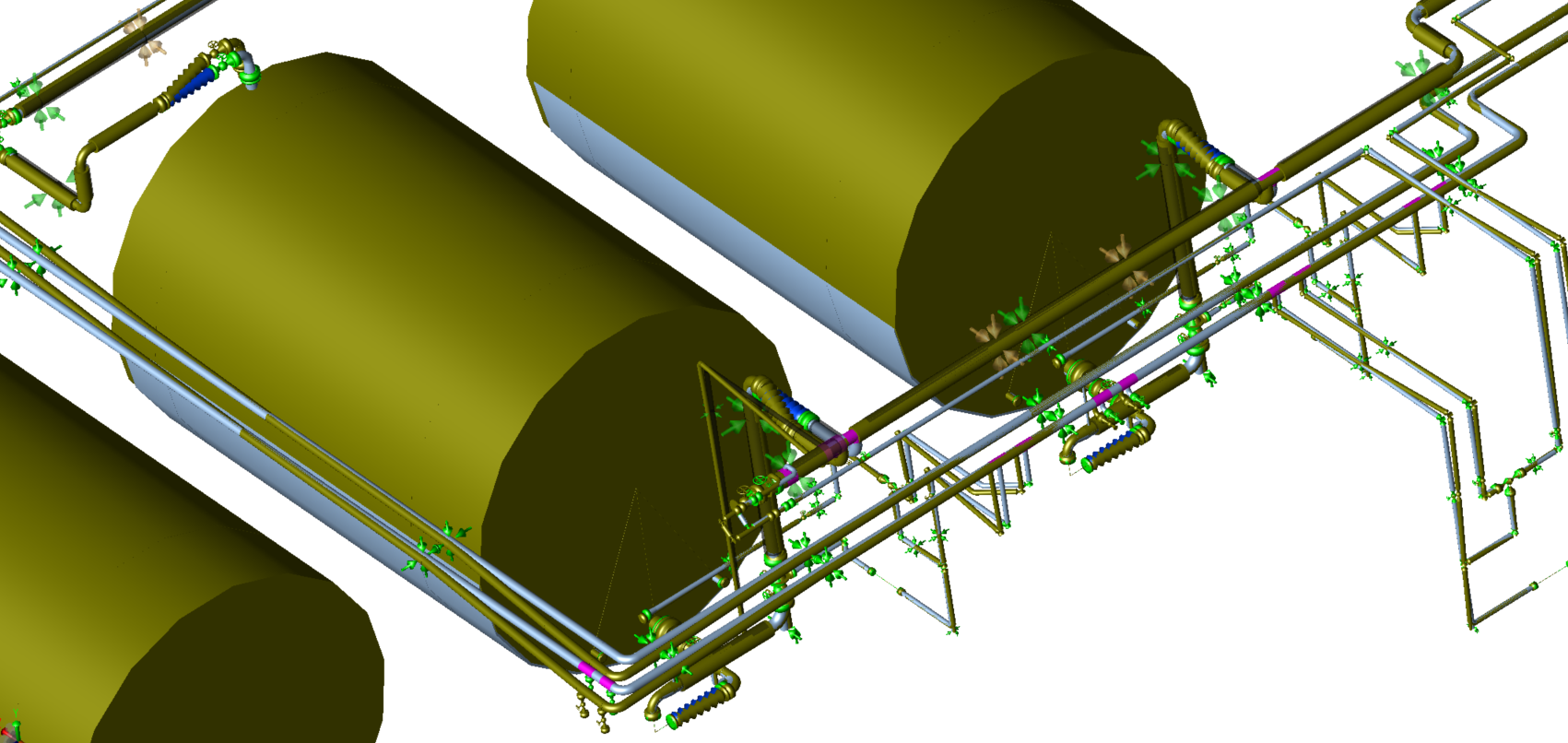
NXT Process performs the verification for you using CAESAR II, the industry-standard software for pipe stress analysis. Each mandate includes:
- Full modelling of the piping system in CAESAR II.
- Code load-case verification under the applicable code (ASME B31.1 or B31.3).
- A report sealed by an OIQ-licensed engineer, ready to go into your compliance file.
- Practical recommendations if the system doesn’t pass: supports, anchors, expansion loops or expansion joints.
Why work with NXT Process?
- An official CAESAR II licence (Hexagon).
- OIQ-licensed engineers specializing in the ASME B31 codes and pipe stress analysis.
- Completed mandates including a regulated ammonia system, pressurized hazardous-material piping, and steam and thermal oil systems.
NXT Process is a liquid process integrator offering engineering services.
Not sure whether your piping is covered? Let’s find out together, at no charge.
Send us your drawings or give us a call. A short conversation is often all it takes to determine whether your systems are regulated and what the verification involves.
s.brunellejestin@nxtprocess.com · 514-613-6535
Standards referenced
ASME B31.3, paragraph 319 · ASME B31.1 · CSA B51 · CSA B52 · BNQ 3650-900 · Regulation B-1.1, r. 6.1
This is general business information, not engineering advice. The thresholds above summarize a regulation that includes specific exemptions; every case should be confirmed by an engineer.
Sources: Regulation respecting pressure installations (chapter B-1.1, r. 6.1), sections 1, 2, 3, 4 and 11; CSA B51; ASME B31.3 (para. 319) and ASME B31.1; BNQ 3650-900.